WE ARE STILL ARRIVING
An update from our movements. We (Carmen Fairlie and Teah Carlson) recently travelled to Toronto for the American Psychological Association Division 24 conference, Madness, Mysticism, and the Re-enchantment of Psychology, held on the lands of the Mississaugas of the Credit, the Anishinaabe, the Haudenosaunee and the Wendat peoples.
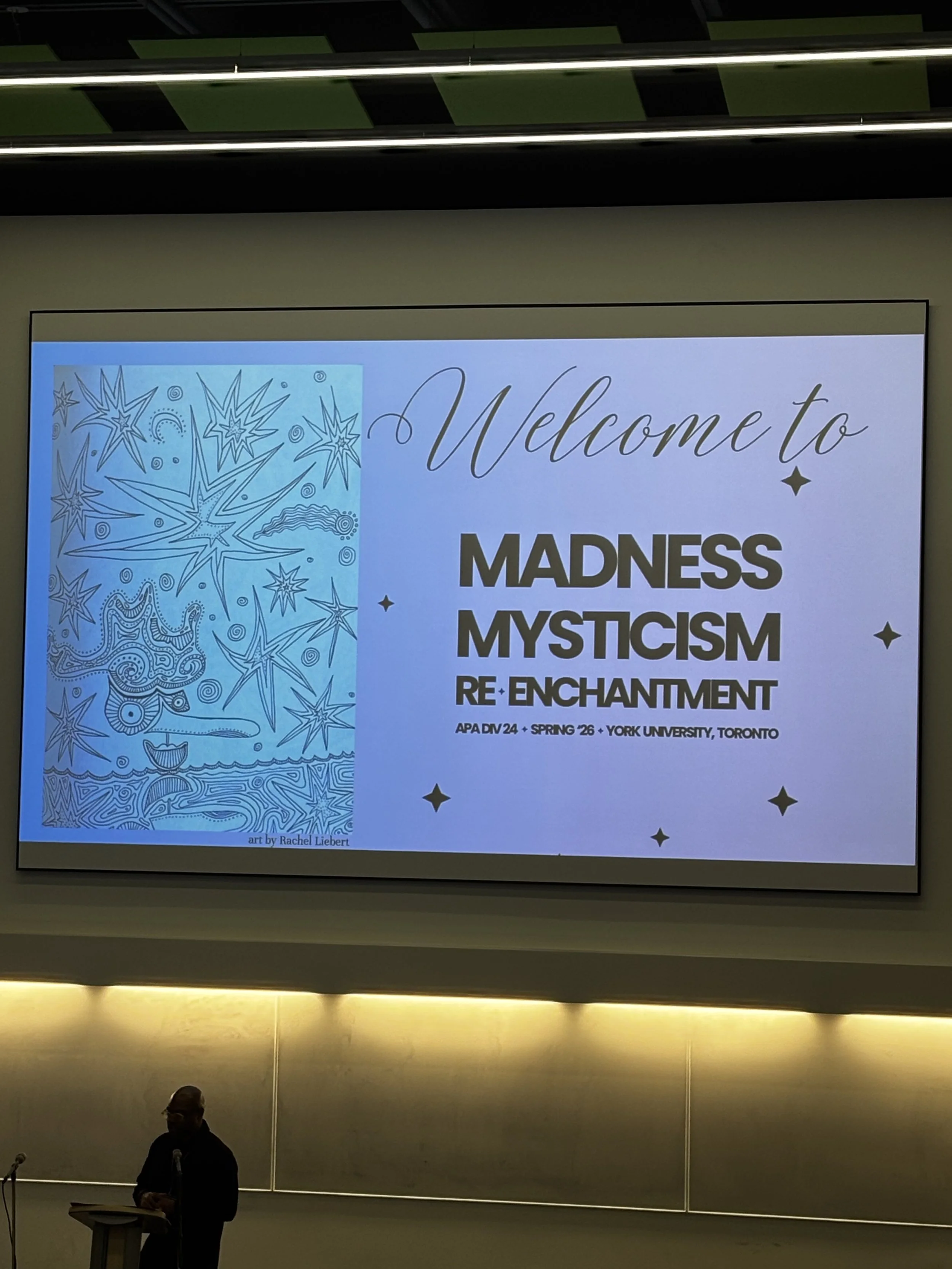
Welcomed by Rachel's art! Her mahi toi was woven throughout the conference, holding the space from the moment we arrived.
I (Teah) will be honest with you. As a psychologist, I mostly avoid psychology things. They are too much hard work. As an Indigenous Māori wāhine, there is the bias, the racism, the lateral violence, and the relentless pathologising of the world and everyone in it. I almost always walk away from these gatherings thinking, that took more than it gave.
This conference was different.
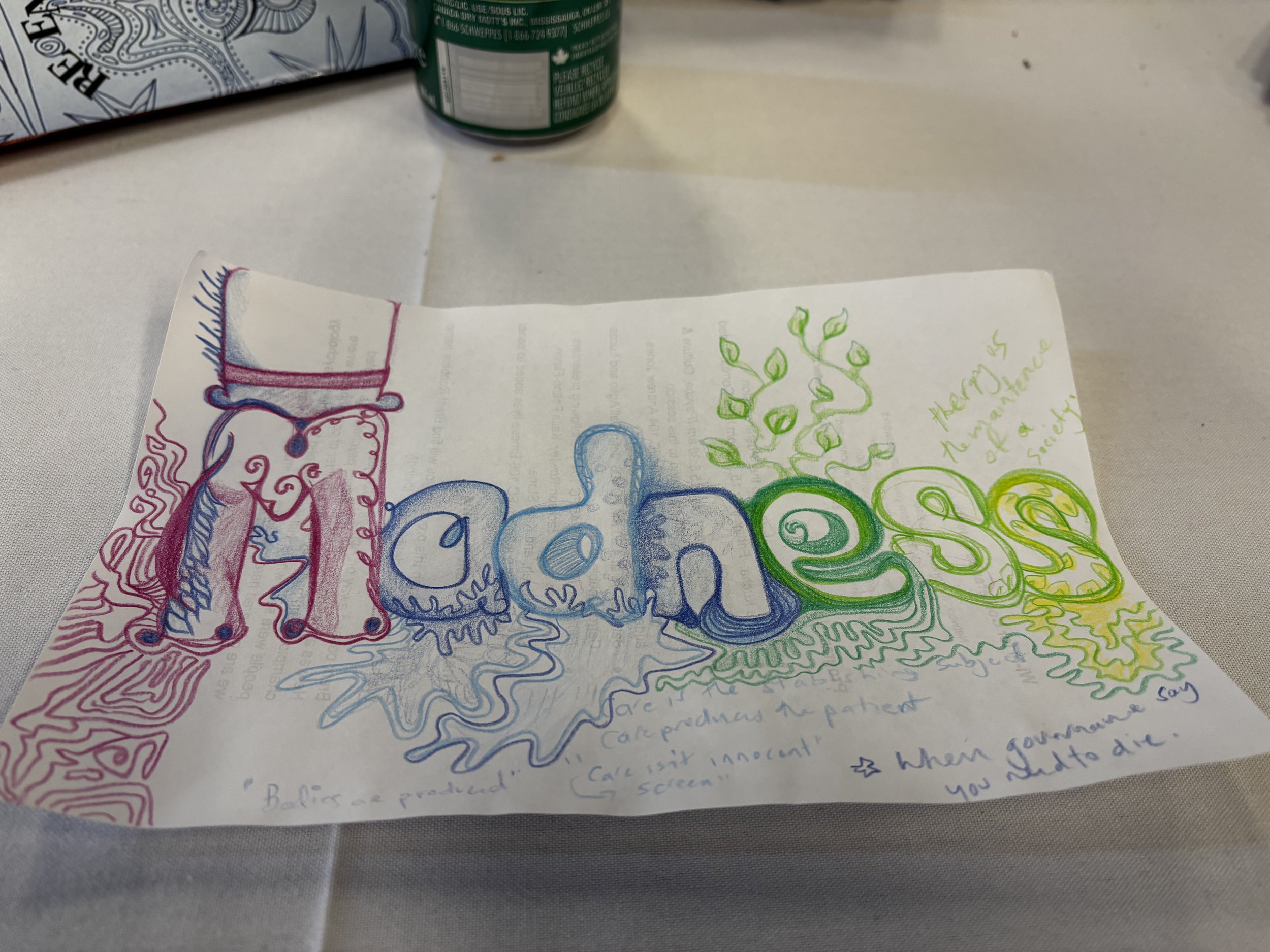
Maybe it was the newness of travelling across oceans to land in moose country. Maybe it was the electric power of Niagara Falls, or the warm welcomes and the smiles that met us at every turn. Maybe it was the witchery and tricksterness inherent in the realms of madness and mysticism, and the amazing students of hauntology who understood, without needing it explained, why we speak of tūpuna in the present tense.
Whatever it was, we walked away with gratefulness. Gratefulness to Rachel, for connecting us with her scholar whānau. Gratefulness for the immense privilege it is to travel the globe while it is on fire, a privilege we do not carry lightly. And gratefulness for the aroha that made the hikoi possible at all. This journey happened through the koha and generosity of our friends and of amazing people, locals who opened their homes for us to stay. We were held the whole way. That is worth saying plainly, because it is how our people have always moved: not on institutional budgets, but on relationships.
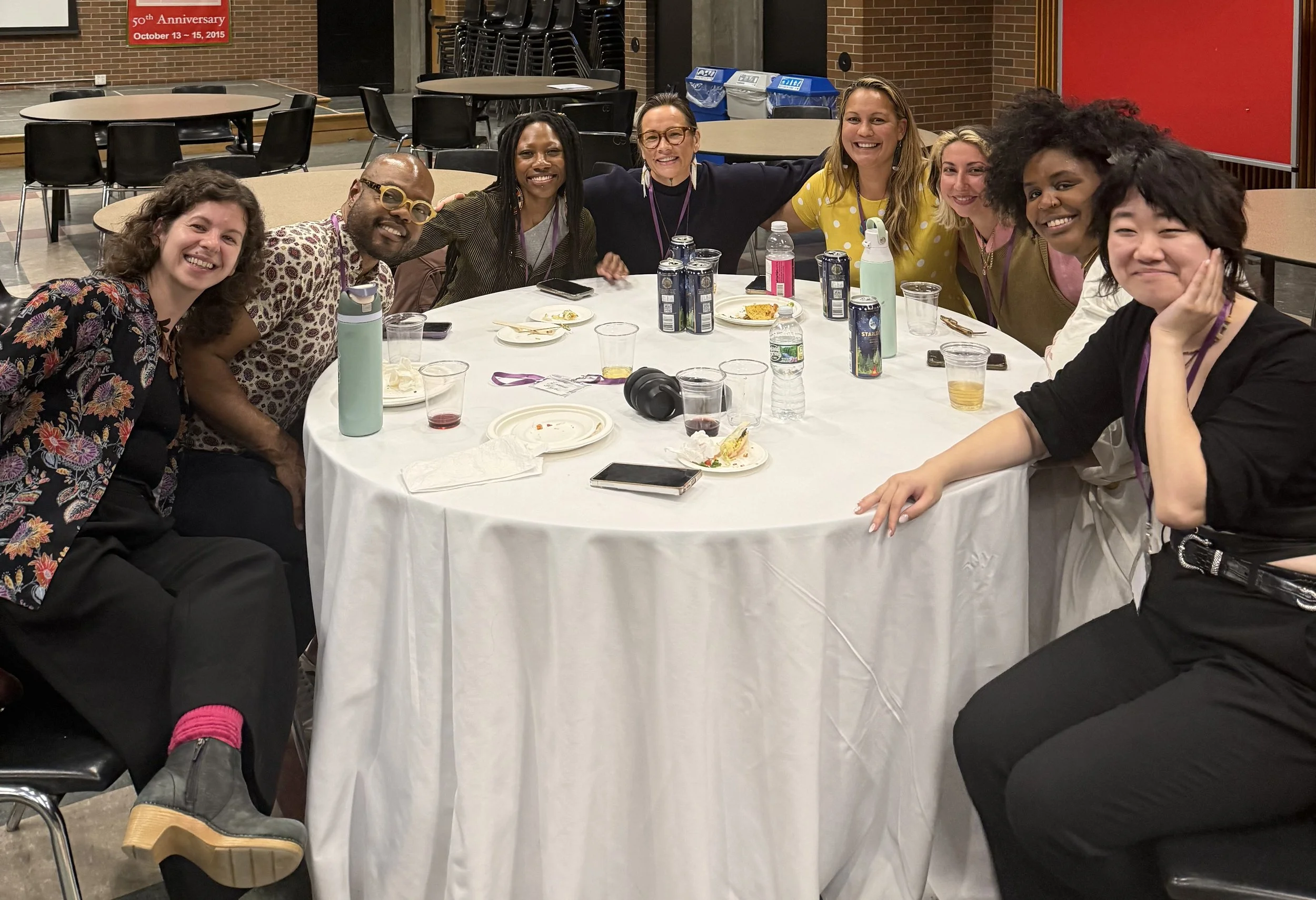
Our stunning new friends
The gathering itself lived up to its name. There was laughter and tears, dancing, tai chi in the wind, poetry bouncing off concrete walls, deep theory that provoked and challenged, and research that insists on accountability. There were harder moments too, moments that reminded everyone in the room how old the academy's wounds are, and how much work it takes just to make a space that does not replicate them. The organising collective named all of this openly, which is itself rare and precious.
After attending the breadth of what the conference had to offer, we closed our presentation with these words.
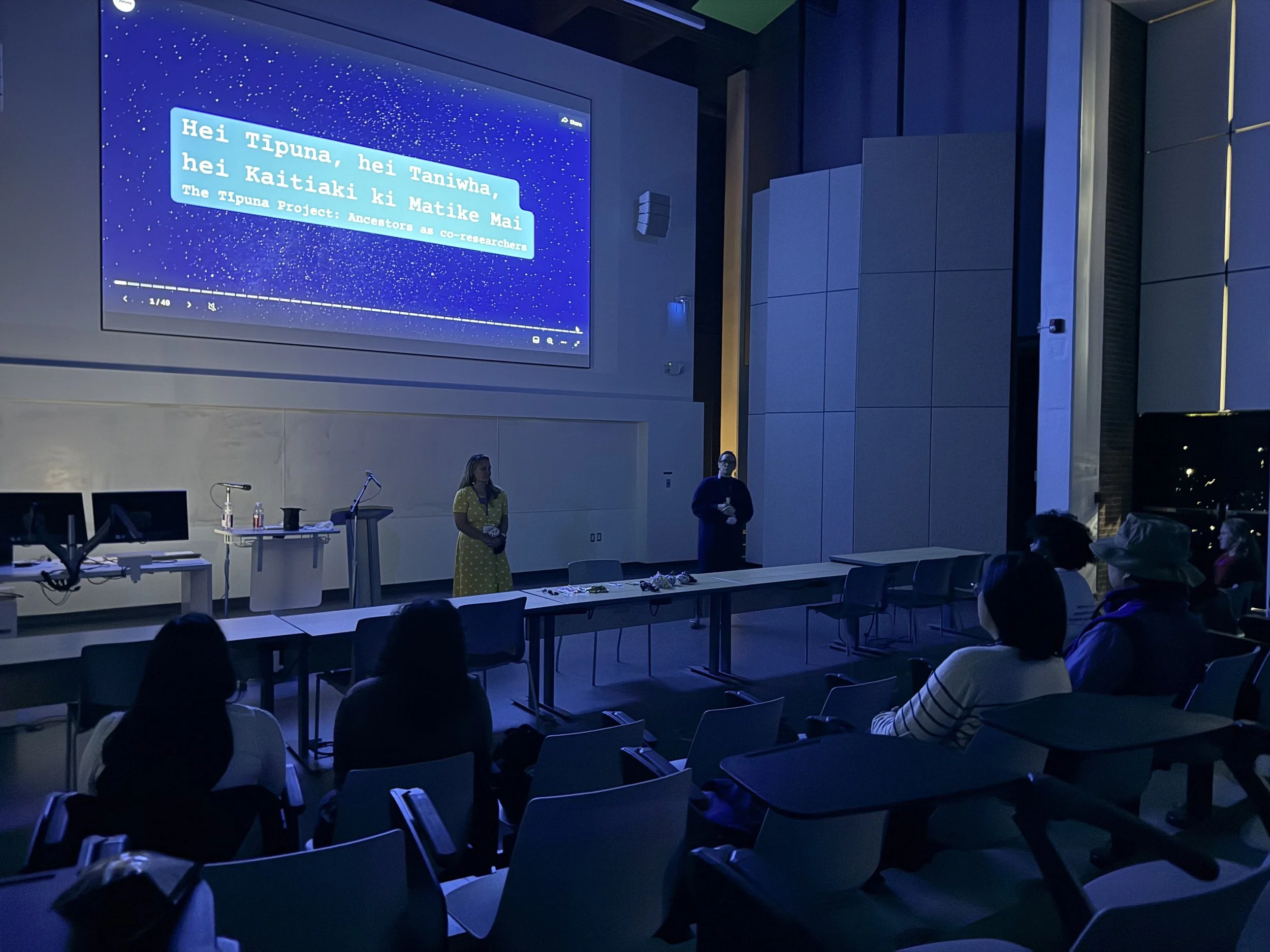
Settling in darkness we wā
“Today we could have given you frameworks. Language. Something tidy you could write down and carry away, the way so many have offered at this conference.
But we didn't come here for that.
What we have to share cannot be told to you. It has to be experienced. So thank you, truly, for staying in the room with us. For letting it be uncomfortable.
Indigeneity is a way of being. It is shaped in the long, enduring relationships between people and land, between people and people, between people and spirit. It lives in the body before it ever lives in a book.
And yes, it carries answers. Answers to so many of the crises named at this conference.
But here is the part that must not be misunderstood.
The way into those ways of knowing does not come from learning about us. It comes from confronting yourselves. Because the very conditions that hold you at a distance from these ways of being are the conditions that have given you power, comfort and certainty.
So this is not an invitation to move closer to indigeneity. It is an invitation to turn around. To examine your relationship with the structures you are already within. To ask what you uphold. What you benefit from. What you protect.
And there is something else happening here. Something that is not for everyone. When we speak of haunting, we are not offering a concept to understand. We are signalling to each other. To our Indigenous, Black and brown cousins, across this room, across oceans, across time.
Our tīpuna are not relics of the past. They are present. They are active. They are conspiring with us toward futures not yet realised.
And when we name taniwha, when we speak of forces, of presences, of disruption, this is not metaphor for your interpretation. This is communication. A code. An SOS. A calling across time that says, we are still here.
Because there are, in truth, two movements unfolding. One is the ongoing maintenance of colonial systems that continue to extract, to dominate, to disconnect. The other is the resurgence of Indigenous ways of being. Relational. Accountable. Intergenerational. These are not parallel paths. They are in tension. And they cannot coexist indefinitely.
So when you leave this room, the question is not, what have I learned about Indigenous people?
The question is, what is my relationship to the structures that continue to harm?
What am I willing to unsettle?
What am I willing to give up?
Are you willing to stop maintaining the very conditions that make this world unliveable for so many?
For us, we continue. To remember. To practise. To protect. To answer the call of those who came before us.
Our power is not in question. Our presence is not in question.
The only question left is, where do you stand?
Because one way of being is ending.
And another
never left.”
Weeks later, our words travelled home to us. In their final email to the community, the organising collective closed with the kōrero we offered, and wrote that the invitation to examine our relationships to the structures we are already within was, in their words, the invitation of the whole conference. They reminded their community, as The Tīpuna Project reminded them, that times are urgent, and we must be slow (Bayo Akomolafe).
They ended with a line we are still sitting with: we are theorising beings, and we are still arriving.
So are we. The relationships made in Toronto do not end because we parted. Ideas were planted there that are only beginning to grow, and we carry them home to Te Tairāwhiti alongside everything our tīpuna have always carried for us.
Ngā mihi nui ki a koutou katoa.
You can view the full conference programme here.