Ngā mahi
What are we up to?
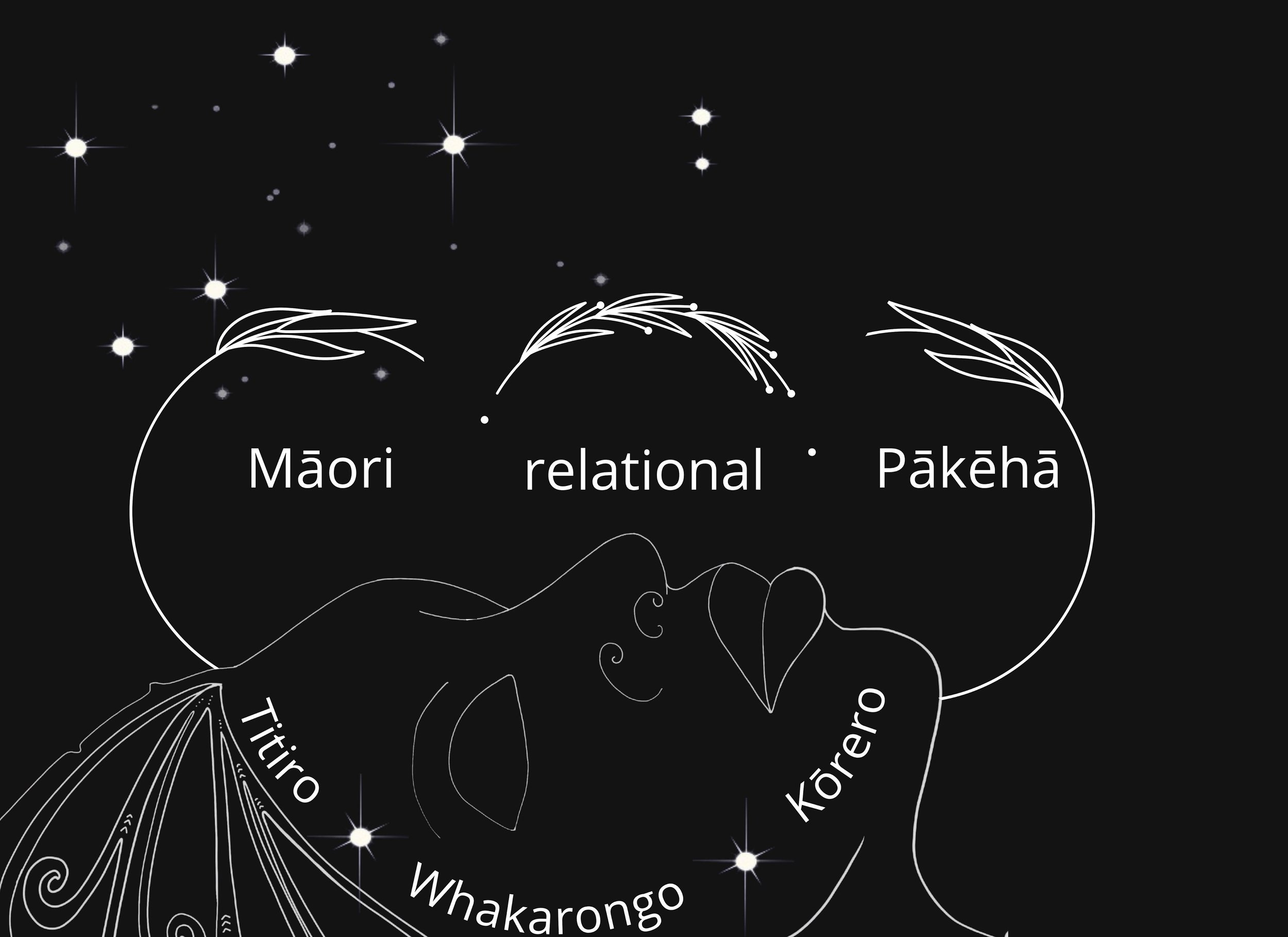
Our mahi spirals through three kinds of practices, inspired by a whakatauki Māori and core value of Kaupapa Māori research - “Titiro, whakarongo… kōrero”
Titiro
A practice of observing & being, looking for tohu, of learning practices for communing with our tīpuna & ancestors.

Whakarongo
A practice of listening & sensing, of conducting a PAR* project with our tīpuna & ancestors.

Kōrero
A practice of action & sharing, of hosting spaces for community to commune with their tīpuna & ancestors.
Guided by the vision of Matike Mai (a nationwide, Indigenous-led movement for constitutional transformation), we often do these activities in separate Indigenous and non-indigenous spaces, and move into ‘relational’ spaces for collaborative mahi between our members when it feels both necessary and right.
*Participatory action research (‘PAR’)
PAR is research that is conducted by a collective of community members (‘co-researchers’) who come up with a research question about a social issue in their communities, design and undertake data collection and analysis in response to this question, and then use their findings to take action.
Co-designed through three years of kōrero with Indigenous and non-Indigenous national and and international folx committed to decoloniality, The Tīpuna Project began as a PAR project to address the following social issues in Aotearoa:
The denigration of Indigenous ways of knowing and being
The historically traumatic nature of research for Indigenous peoples
Low white settler accountability
We approached these issues by asking overall, "What are the decolonial possibilities - and complexities - of including ancestors as co-researchers in PAR?” Between September 2023 and February 2026, Māori and Pākehā co-researchers designed and participated in a number of activities with our ancestors, and then journaled about these experiences using eclectic forms. These journal entries became the data that we then analysed to see how our ancestral mahi was affecting us and, in turn, how it might contribute to tino rangatiratanga, intergenerational healing and settler accountability.
At the same time, through embodied, inspirited and otherwise ‘more-than-human’ approaches to these activities, we experimented with ways to decolonise the research process.