DEADLY AUNTIES
Last year, te roopū Māori travelled to Turtle Island for the fourth and final wānanga of our constitutional inquiry. Over eighteen months we had gathered in Tūranganui a Kiwa, at Karekare, and in Manukau, and in 2025 the kaupapa carried us across the moana to the homelands of the Hohokam, Yavapai, Pima, Maricopa, Tohono O'odham, Pueblo, Apache and Navajo nations, and to the Reclaiming Indigenous Ecologies of Love conference. Everywhere we went, we recognised the shared power of Indigenous aunties: those who hold space for laughter as medicine, wield rongoā and ceremony as joy, and lead with tenderness, impatience for injustice, and uncompromising strength.
And it was there, in the middle of that journey, that our tamariki did something none of us saw coming.
They had been travelling alongside us the whole way, quietly watching how we showed up for one another. Organising kai. Carrying each other's grief. Cracking jokes at the edges of exhaustion. Then one afternoon they presented each of us with a sticker. It read: deadly auntie.
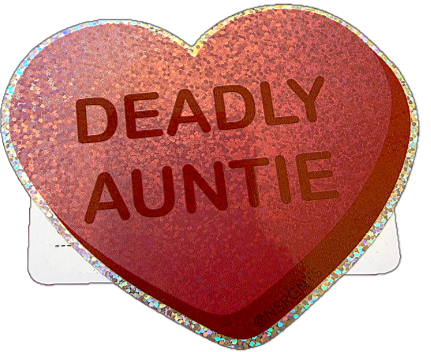
They named what they had seen before we had fully claimed it ourselves.
We write about that moment in our newest paper because it holds the whole argument in miniature. Those stickers were not a playful gift, or not only that. They were constitutional declarations from the next generation, an acknowledgement that the aroha work of holding, protecting, organising and pushing back mattered to their sense of safety and possibility. Our mokopuna were reading aroha as instruction, not sentiment. They were watching law being practised.
Because that is what we argue in the paper, and what three years of wānanga across the motu have taught us. Aroha is not soft. It is not a feeling to be mentioned in the acknowledgements section and then set aside.
Aroha is a constitutional force, a way of organising life, making decisions, protecting whakapapa and holding each other accountable to tīpuna and mokopuna at once.
Our tīpuna understood this. Wāhine Māori have been practising it all along, often while carrying the heaviest loads through the coldest institutions.
The paper traces this whakapapa from te whare tangata into law. The National Kaitiaki Regulations of 1995, born from the determined advocacy of Māori women after the Cartwright Inquiry, wrote the sanctity of te whare tangata into Westminster law and anticipated the data sovereignty struggles of the artificial intelligence age by three decades. Love, it turns out, can be constitutional without ever appearing as a clause. It lives in who holds the data, who has access to water, whose grief is given time.
And we do not travel alone. The paper sits aroha alongside its cousins: aloha ʻāina written into the Hawaiian constitution in 1978, Native American teachings of love that grows through generations, and the long line of Black love warriors who, as Cornel West reminds us, met chronic hatred with a disciplined, clear-eyed love that insisted on structural change. A whole constellation of love as law, and aroha shining within it.
Here is an excerpt from the paper.
"Aroha is not an idea. It is not a metaphor. It is the living intelligence that pulses through our veins, the warmth of embrace that binds us to whenua, to whānau, to wairua, to the infinite. This paper has not so much argued for aroha as it has listened to it, traced its movement through the marrow of our methodologies, and witnessed its quiet, radical work in the everyday acts of healing, resistance, and constitutional transformation.
Through our experiences in TTP we were reminded that knowledge is not a possession but a relationship. Aroha is the relational current that makes knowing possible. It is the breath that animates our research, the humility that asks us to rest, to reflect, to connect, to metabolise pain and joy alike. It is the discipline of attention, the willingness to see, to feel, to be changed by what we encounter. In this, aroha is both the question and the answer, the journey and the arrival."
Our tamariki already know all of this. They handed it to us on a sticker.
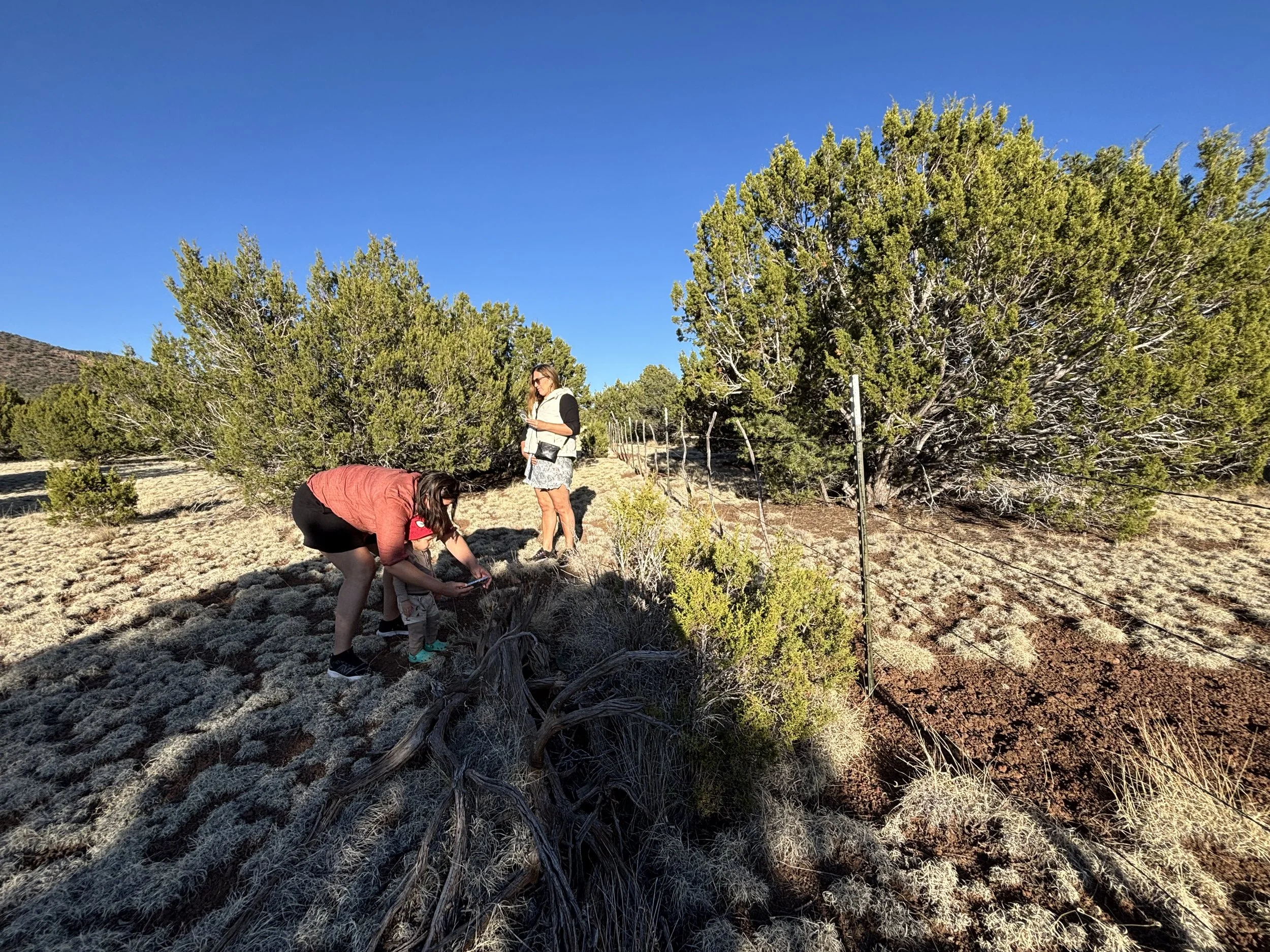
Alongside the four wānanga, the paper draws on community activations across the motu responding to the aftermath of Cyclones Hale and Gabrielle, the Hīkoi mō te Tiriti, and the vandalism of the Gisborne rainbow crossing, all unfolding within a political moment that has asked so much of our people. We will share publication details here as soon as the paper is out in the world.
Until then, we leave you with the question the paper ends on...
What if our most radical act is to love our whenua, and each other, so deeply that the world must shift to meet us there?