
Whakarongo
A phase of listening & sensing, of conducting a PAR project with our tīpuna & ancestors.
November 2025
Wānanga Pākehā
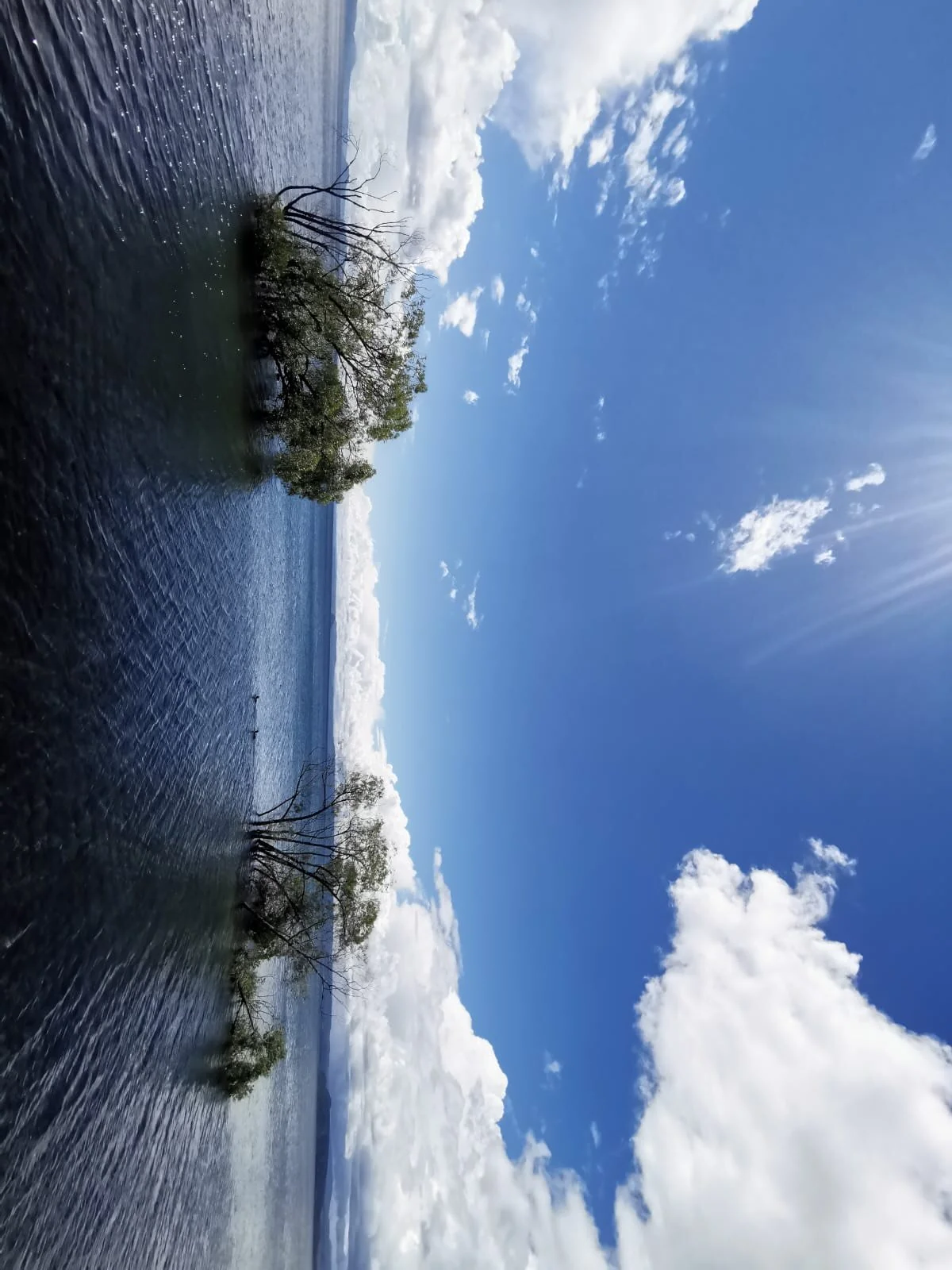
This November, Te Rōpū Pākehā gathered again at Kuratau (Ngāti Tuwharetoa) for our final wānanga to ‘analyse’ the ‘data’ we have collected during our PAR project. After a day of individual and collective reflection with our ancestors and te taiao on what we have digested over the last two years, we sat together to create some initial ‘droppings’ (cf. ‘findings’) about the potential of ancestral/embodied/more-than-human mahi for decolonisation. Wary of instrumentation, solutions, exhaustive lists, we leant into this kaupapa as creating the conditions in our bodies for something else to emerge – an unnameable way of being and relating that is more-than- – or maybe even other-than- – colonial. With Matua Moana Jackson’s ‘ethics of restoration’ as a guide, we spoke of ceding control, slowing down, softening, care and a kindof sideways relationality with human and non-human kin that helps move us away from the fascistic tendencies of white bloodlines. We spoke of this research as a practice of being (g)hosted and transplanted (cf. being ‘supplants’) in a settler colonial state, encouraging decol as a practice of guesting. And through ritual, mystery and pausing, we began to imagine what shape TTP could take from here, leaving with a commitment to each continuing the work locally and finding ways to tautoko a beautiful growing ecosystem of decol practitioners in Aotearoa working in ancestral/embodied/more-than-human ways (including by finding a shorter way of saying this..!). Big mihi to the McCreanor whānau for your welcoming whare, Tehseen and Albie for helping to take care of our human and non-human babes, and to the babes themselves for keeping our process porous – protecting us Pākehā from a perfectionism that otherwise feeds our settler colonial (mind)states <3

May, 2025
Samhain II
On Friday May 9th, three Pākehā co-researchers (Rachel & Lillian & Holli) hosted another evening in Tāmaki Makaurau to celebrate Samhain – a seasonal and lunar period within Irish paganism for communing with ancestors. Once again, guests were asked to “bring a dish and an ancestor” in the tradition of a ‘dead dinner’ whereby people feast with their ancestors, sharing stories of their lives. After video-calling with a Gaelic elder living in protection of the ancestral cairns of Loughcrew, Meath, we opened the dinner with an adaptation of a traditional fire ceremony and an invocation to Matike Mai. It was a great space for experimenting and thinking together about the decolonial potential of collective ritual. Special thanks to Lar for your ongoing generosity, all who came long on the stormy night, Te Kawerau-A-Maki for having us and fire - for keeping the possibilities of transformation alive and dancing.

February-March, 2025
Activist wānanga
Te Rōpu Pākehā hosted a 3-day wānanga at Kōtare – a residential activist school in Hoteo North where Ngãti Paoa, Ngãti Whanaunga, Ngãti Whãtua, Ngãtiwai, Te Kawerau a Maki and Ngãti Manuhiri all have mana whenua. In the foothills of Kikitangeo, we gathered with 14 other decolonial activists working locally throughout the motu toward Pākehā accountability. Our kaupapa was clear: to think/feel/imagine if and how ancestral sensing could contribute to Matike Mai. With trickster babes and unwavering cicadas alongside, we (literally) wove a participatory space of cooking, cleaning, care, craft, ritual, seeds, song and stories, as coloured by our Gaelic, Cornish, Pagan, Druid, Christian, Jewish and otherwise trancestor and mycelial lineages, and textured with whakaaro from neighbouring settler colonies - Australia and Palestine. We left feeling strength in the connection, protection, accountability and messiness offered by our enchanted entanglement. A month later, we held an online ‘harvesting hui’ to hear how people’s varied decolonising practices may be being affected by our time together. Huge thanks to all who came and to Kōtare for the powerful space.
November - December, 2024
Treaty Principles Bill
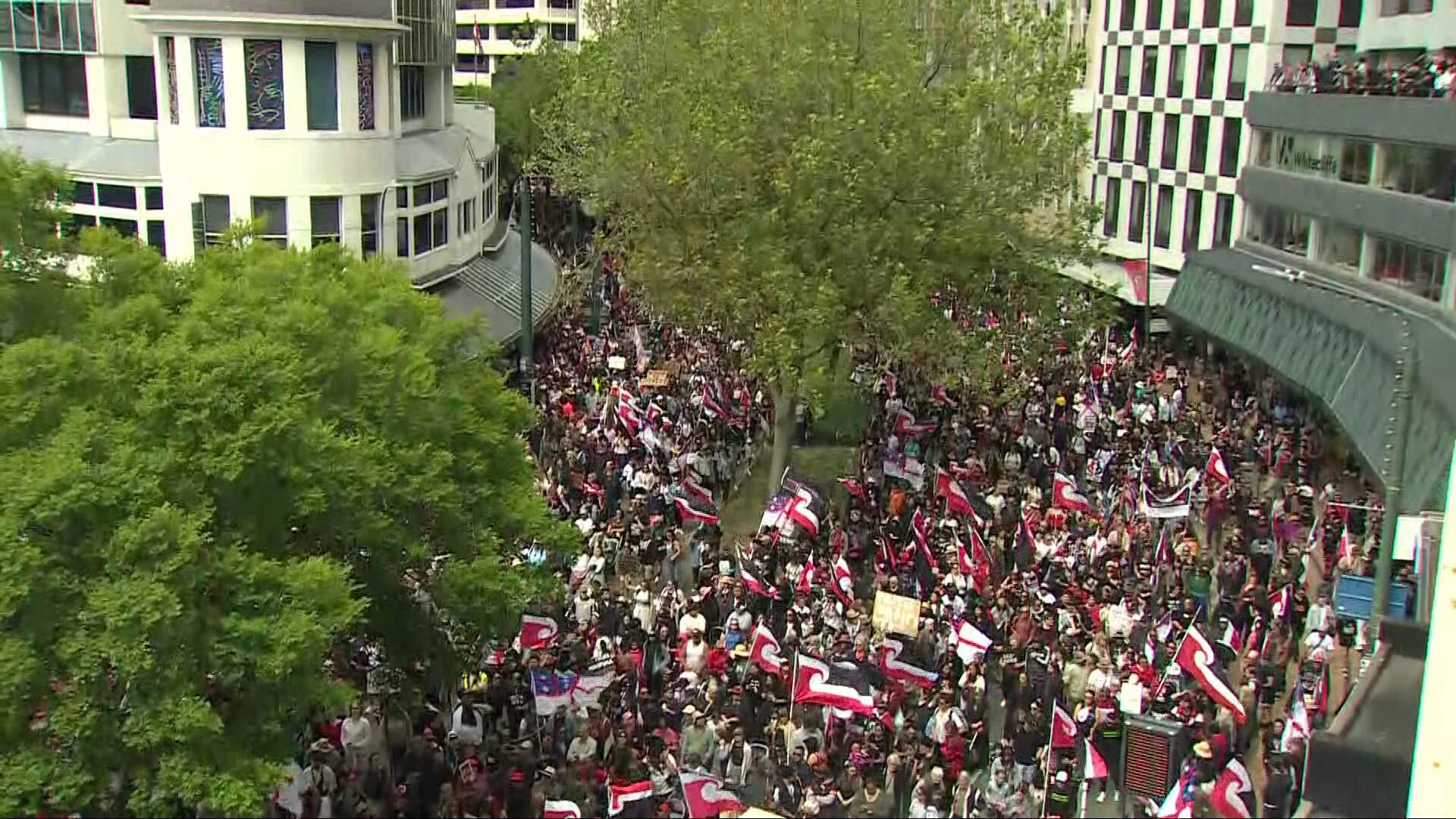
Members of Te Rōpū Pākehā participated in national actions against the Treaty Principles Bill – proposed by the new government to continue to undermine Te Tiriti o Waitangi. From individual and group submissions against the bill to conversations with friends and family and co-organising a 100,000-strong hikoi to parliament under the korowai of Te Kotahitanga o Taranaki Whānui ki te Upoko o te Ika, the actions provided a potent space to reflect on the decolonial possibilities, complexities – even perhaps necessities – of having an ancestral orientation within Pākehā activism, including how this orientation beautifully obliges sub-cultures that can counter the urgency and burnout typical of whiteness and coloniality.

June, 2024
Inhabit
From 8th-30th June in Tāmaki Makaurau, Pākehā co-researcher, artist, single mama and doula, Holli, held Inhabit – a participatory, community space for making visible the invisible labour of post-partum care with strong commitments to birth, gender and racial justice. Taking over an empty shop space with over 100 hand-embroidered and kitchen-dyed nappies containing participants’ ongoing messages to each other, Holli made space throughout for public workshops and craft – tapping a pagan practice from her own maternal lineage. As The Tīpuna Project, we also co-facilitated a session for people to tell/catch their ancestors’ stories of birthing, motherhood and queer care – reminding us of the need to make decolonial spaces for intergenerational grieving that, for Pākehā, can hold being both recipients and perpetrators of violence.

May, 2024
Samhain I
On Saturday May 11th, two Pākehā co-researchers (Rachel & Lillian) hosted an evening in Tāmaki Makaurau to celebrate Samhain – a seasonal and lunar period within Irish paganism for communing with ancestors. Ten guests were asked to “bring a dish and an ancestor” in the tradition of a ‘dead dinner’ whereby people feast with their ancestors, sharing stories and poems of their lives. After video-calling with a Gaelic elder living in protection of the ancestral cairns of Loughcrew, Meath, we opened the dinner with an adaptation of a traditional fire ceremony and an invocation to Matike Mai, and then ended the night singing Gaelic songs of mourning and protest in front of the fire. Special thanks to Lar for the wānanga, Andrew for the songs, Aaron and Michael for coming up from the Waikato and Te Kawerau-A-Maki, as always, for having us <3

March, 2024 - May, 2025
Gathering at the Gate
Two Pākehā co-researchers (Wren & Dani), are part of the founding facilitation team for Gathering at the Gate - an online, 7-week collective enquiry into ancestral recovery and honouring Te Tiriti o Waitangi for Pākehā and other white-assimilated folx in Aotearoa. Over 150 people have now done the course, and the TTP Pākehā collective are undertaking an experimental evaluation to document the cracks, reverberations and shimmers of/in their experiences in relation to Matike Mai - with a specific eye to the role of ancestral sensing in this kaupapa.

March, 2024
The softness of the suited heart
Pākehā co-researcher, Sarah, wrote a piece for Indigenous-led online media platform, E-TANGATA, on the connections between being Pākehā, grief, and ancestry, and how these can provide hope in challenging times.

March, 2024 - present
PAR Pākehā
Since March 2024, Pākehā co-researchers (and our ancestors) have been working on a participatory action research (PAR) project in response to a recurring need we hear from Māori: for Pākehā to ‘do the work’ so that we are able to step into a respectful, reciprocal relationship. This relationship is both called forth by the vision of Matike Mai (an Indigenous-led movement for constitutional transformation by 2040) and under constant threat, as shown by the current visibility of colonialism in our national politics.
Keeping in mind this ongoing settler colonial context, as well as the failings of a cognitive approach thus far with Pākehā alongside tendencies toward ‘spiritual bypassing’ in more-than-cognitive approaches with White folx generally, our PAR project is asking: (How) can ancestral sensing prepare Pākehā for Matike Mai? Within this guiding question, are several sub-questions around what ‘ancestral sensing’ is, accountability to Māori, embodying decoloniality and envisioning/transforming Pākehātanga.
These (sub)questions are both energising and tethering our PAR process. Approaching ‘data collection’ as an opportunity to (re)distribute resources, honour relationships and build movements, we are experimenting with various modes of ancestral sensing (from direct action and hands in soil to ritualised drawing and speaking Gaelic), including through our involvement in several decolonial projects and through hearing from others who are gently and intentionally trying to ‘do the work’ in more inspirited ways. Through eclectic journaling and regular chats, we are documenting our shared experiments, experiences, whispers and wonderings, slowly weaving them together to see what patterns emerge for taking concrete action toward Matike Mai.
More spiral than linear, this PAR process is unfurling as we listen and learn, helping us to be as response-able as possible <3


9 - 11 February, 2024
Ūawanui a Ruamatua Wai
Cyclone Gabrielle Tairāwhiti, Anniversary
A Ka Mua Ka Muri Creative Collaboration
Teah and Karmen from Te Rōpū Māori were involved in a collaborative week-long event in commemoration of the first anniversary of Cyclone Gabrielle. The kaupapa involved local and national creatives, professionals, talent, and community connecting over a weekend to create, design, storytell and energise a movement towards elevating extreme weather preparedness discussions and tautoko locals to actively engaged in sustainable land use and adaptation planning.